Antique Gun Cabinet Restoration in Fort Collins: New Glass, LED Lighting, and a Full Wood Refinish on a 1960s Hexagonal Pine Cabinet
Some projects arrive looking like a lost cause. The cabinet is locked and no one has the key. The glass panels are original 1/16 inch stock that would shatter under any real contact. The finish has worn down past the point of surface restoration. The interior felt is compressed and tired. Everything about the piece says it has been sitting in storage for a long time and the people who owned it were not sure it was worth saving.
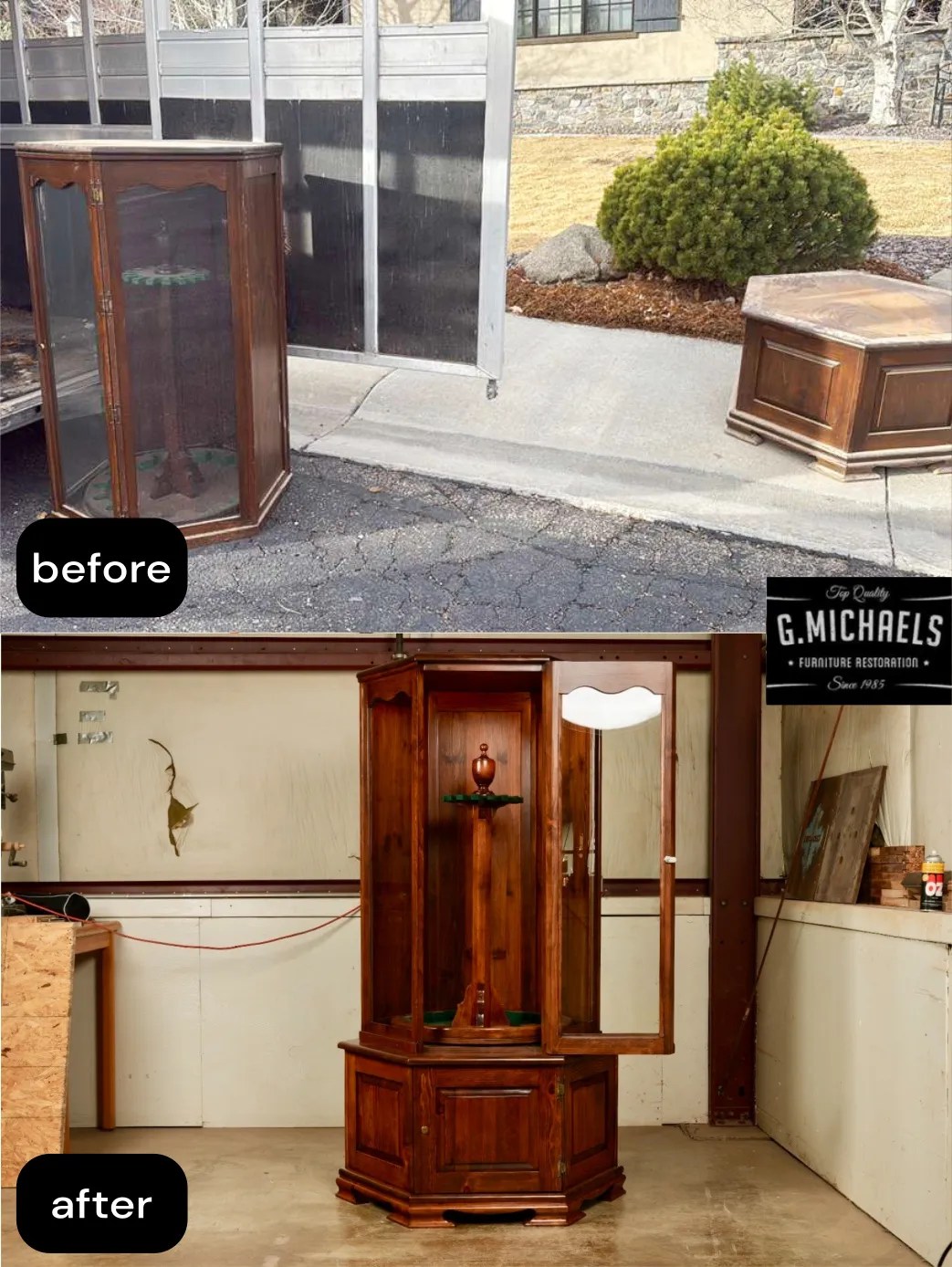
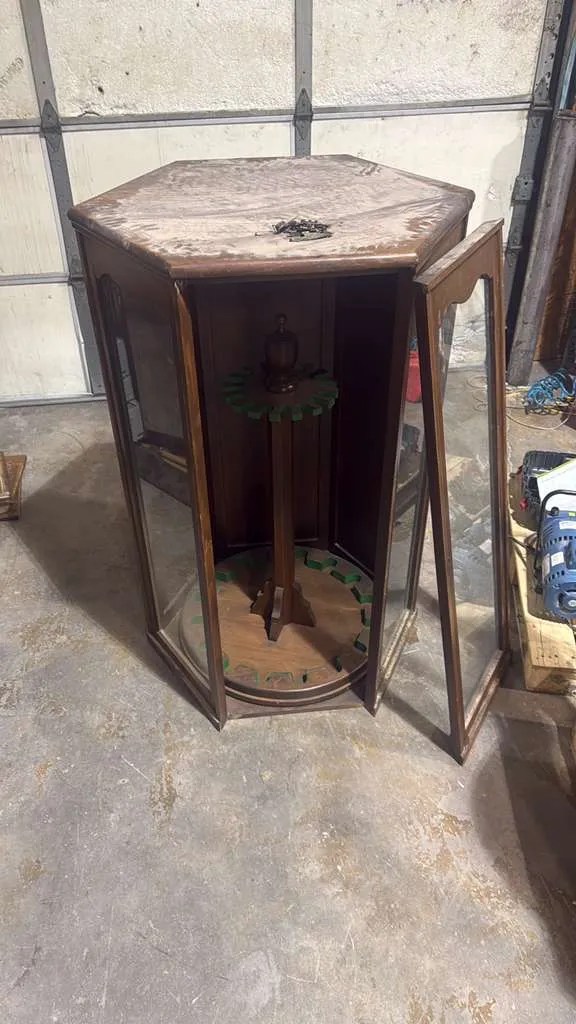
This 1960s hexagonal pine gun cabinet was exactly that project when it came through our doors. The before photos tell the story clearly: a heavily worn two-piece cabinet, the glazed upper display section separated from the hexagonal base, sitting outside with a finish that had seen better decades. Looking at it objectively, most people would have walked past it.
We did not. And the finished piece justified every hour we put into it.
Project Overview
This project was more involved than a standard wood refinishing job. It required coordinating multiple trades and specialists to bring every element of the cabinet up to a standard the original construction never reached. Here is what the full scope covered:
- Lock picked and a new key fabricated from scratch by Red Rocks Locksmith Denver, our trusted locksmith partners who handled the original lock without damaging the cabinet
- Original 1/16 inch fragile glass panels replaced with 3/16 tempered glass throughout, handled by our partners at Black’s Glass, improving both safety and optical clarity over the original
- Old fluorescent T8 tube lighting removed and replaced with two 12-inch COB LED strips with color-changing capability and a remote control
- New wool felt installed throughout the interior of the upper cabinet section
- Full wood restoration and refinish on both the upper glazed section and the hexagonal base, addressing the worn surface, scratches, and finish deterioration across the complete piece
The Cabinet: What This Piece Actually Is
Before the process, the piece deserves its own attention.
Hexagonal gun cabinets of this type were produced by several American furniture manufacturers during the 1950s and 1960s, built from solid pine with glazed door panels, interior display hardware, and a separate storage base. The form is distinctive: the angled facets of the hexagonal profile give the cabinet a presence in a room that a standard rectangular cabinet does not have, and the combination of the glazed upper section with the solid paneled base creates a two-part piece that reads as architecturally considered rather than purely utilitarian.
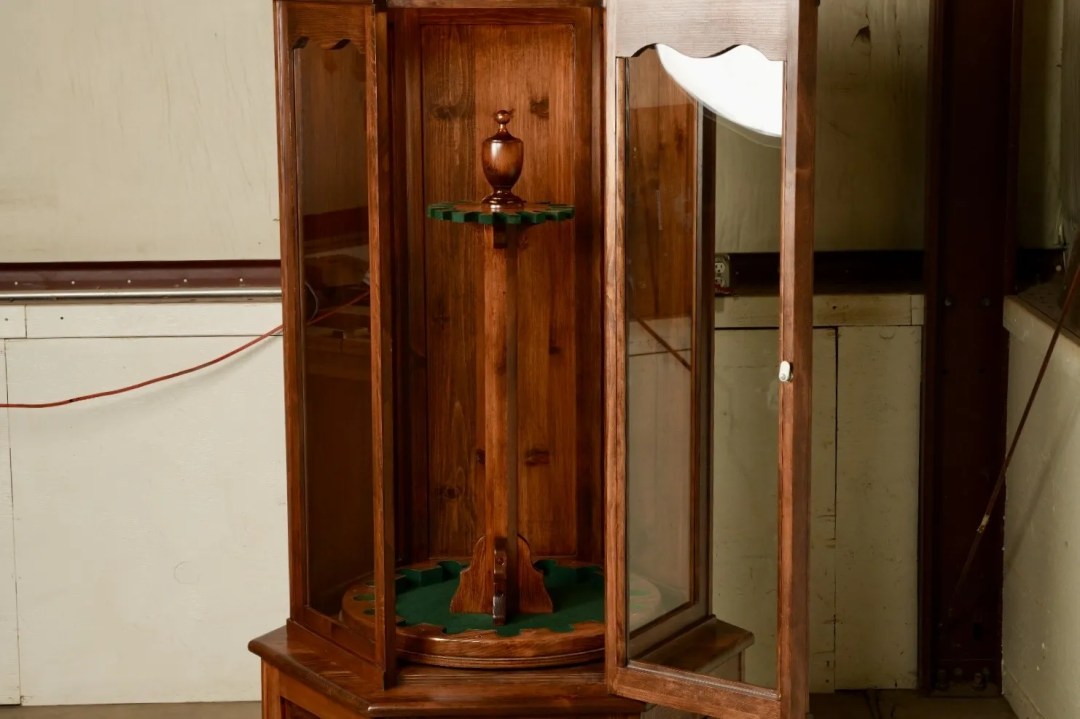
This particular cabinet has additional interior detail that makes it more interesting than a basic display case: a turned central post with a display platform, carved cutout footings at the base of the interior, and scalloped header profiles across the door openings. Someone put real design thought into this piece, and the solid pine construction, while showing significant wear, had held up structurally across more than sixty years of use.
The Larimer County region has a long hunting and outdoor recreation tradition, and display cabinets like this one are a meaningful part of how Colorado families have stored and displayed heirloom firearms and sporting equipment across generations. Restoring one correctly keeps that tradition alive in a home rather than in a storage unit.
Getting It Open: Lock Service Before Anything Else
The cabinet arrived locked with no key. That is not an unusual situation on a piece that has been sitting in storage for years, but it does mean the first step is getting the piece open without damaging the cabinet or the lock mechanism.
We work with Red Rocks Locksmith Denver on projects that require lock service, and they handled this one correctly: the lock was picked without any damage to the surrounding wood or the lock hardware, and a new key was fabricated from scratch to work with the existing mechanism. The original lock was retained in the cabinet rather than replaced, which preserves the period-appropriate hardware and avoids the aesthetic and practical issues that come with fitting modern lock hardware into an older cabinet.
Having the right trade partners matters on a project like this. A restoration that requires drilling out a lock and fitting a modern replacement has already compromised the piece before the wood work begins. Getting it open the right way sets everything else up correctly.
Glass Replacement: From 1/16 Fragile to 3/16 Tempered
The original glass panels in this cabinet were 1/16 inch stock, which is standard for furniture glass from this era and genuinely inadequate for a gun cabinet in active use. Glass of that thickness can shatter from incidental contact with a gun stock during storage or retrieval, which creates an obvious safety problem and a practical one: broken glass inside a cabinet you are reaching into is a bad situation.
Our partners at Black’s Glass handled the full glass replacement on this project. All original panels were removed and replaced with 3/16 inch tempered glass throughout the cabinet. Tempered glass at that thickness is dramatically stronger than the original panels, resistant to the kind of incidental contact that a gun cabinet handles during normal use, and safer in the event of breakage because tempered glass breaks into small blunt pieces rather than the sharp shards that standard glass produces.
The optical clarity of the new panels is also noticeably better than the aged original glass, which had developed the subtle haze and distortion that comes with decades of exposure. Looking at the finished interior through the new tempered panels, the pine grain and the interior detail are sharp and clear in a way the original glass simply could not match.
This is the kind of upgrade that makes a restored piece better than the original rather than merely returning it to its prior condition. For our full approach to cabinet repair and restoration including work that involves trade coordination, see our service page.
Interior Lighting: Out With the Fluorescent, In With LED
The original lighting in this cabinet was a fluorescent T8 tube, which was standard for illuminated display furniture of the period and is now several generations behind current lighting technology in every measurable way.
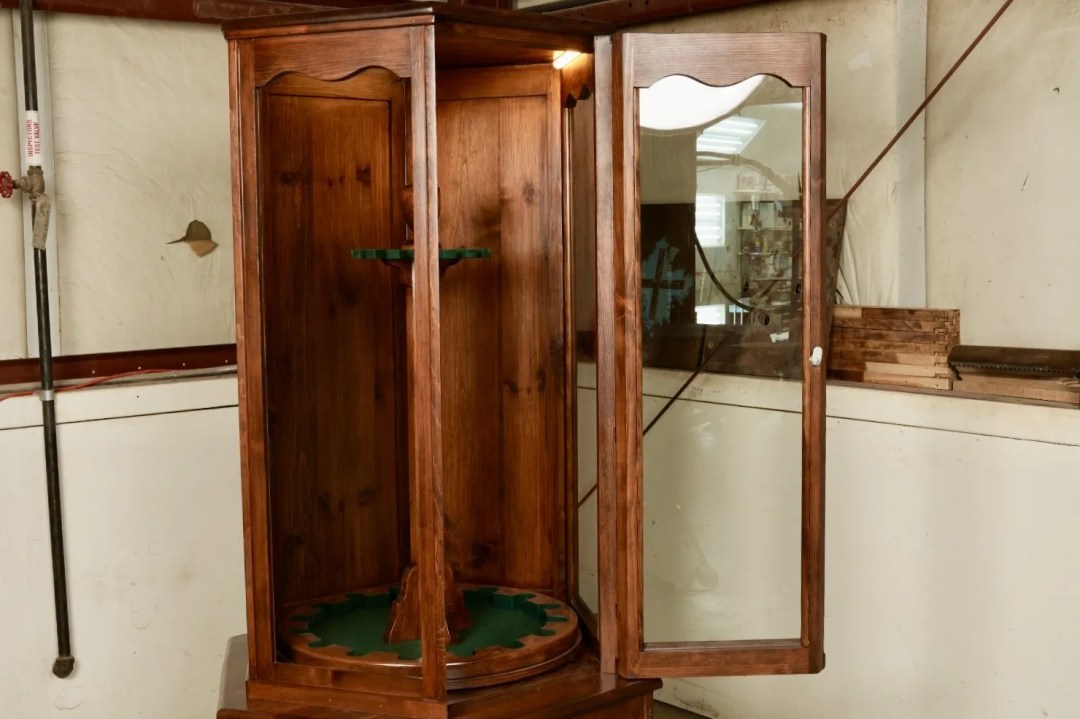
We removed the original fluorescent fixture and replaced it with two 12-inch COB LED strips with color-changing capability controlled by a handheld remote. The difference is significant on multiple levels. COB LED strips produce a more even, consistent illumination than a single fluorescent tube, eliminating the shadows and hot spots that a single-source fixture creates inside a cabinet with angled faceted walls. The color-changing capability allows the owner to adjust the interior tone from a warm amber that complements the pine finish to a cooler white that provides better visual clarity for inspecting the cabinet contents. And the LED strips draw a fraction of the power of the original fluorescent fixture while producing better light output and an essentially indefinite service life.
At night, with the tempered glass panels reflecting the interior LED illumination and the warm pine finish visible through the glass, the finished cabinet is genuinely something to see. The lighting upgrade is the detail that pulls everything else together visually.
Interior Felt: New Wool Throughout
The original felt throughout the interior of the cabinet had compressed and worn over decades of use. Old felt in a display cabinet is not purely a cosmetic issue: compressed felt provides less cushioning and protection for displayed items than fresh material, and old felt can hold dust and debris that transfers to whatever is stored in the cabinet.
New wool felt was installed throughout the interior of the upper cabinet section, covering the display platform, the base floor, and all interior surfaces that required it. Wool felt was the correct material choice for a cabinet of this age and character: it is the period-appropriate material for fine display and storage furniture, it provides genuine cushioning and protection, and it will hold up significantly longer than synthetic felt alternatives under regular use.
The Wood Restoration: What Pine Looks Like When It’s Done Right
With the hardware, glass, lighting, and interior addressed, the full wood restoration work on both pieces could proceed as the final phase.
The upper cabinet section and the hexagonal base were both refinished completely. The existing finish across both pieces had deteriorated past the point where surface restoration would produce a consistent result: the wear was too uneven, and the scratching on the base top in particular had penetrated the finish in multiple areas. Starting from bare wood on both sections was the right call.
The pine on this cabinet, once the old finish was stripped back, showed exactly why solid pine furniture from this era is worth restoring. The grain pattern across the panel faces has the knotty, characterful variation that makes old-growth pine so visually interesting, and the wood had developed the amber depth that comes from decades of age rather than years. That quality of material does not come from a box store.
The finish was developed in a warm, rich brown tone that brings the pine grain forward without suppressing it. Color consistency between the upper section and the base was confirmed under multiple lighting conditions before the protective topcoat was applied. The final surface across both pieces is smooth, even in sheen, and consistent in tone throughout.
For our full approach to wood surface preparation and finish development on pine and mixed-species pieces, see our furniture refinishing and furniture repair service pages.
The Finished Cabinet: Better Than the Day It Left the Factory
That is not hyperbole. The finished cabinet is objectively better than the original on every functional dimension: stronger glass, better lighting, fresh interior felt, a working lock with a proper key, and a wood finish that the original factory finish never matched in quality. The visual result matches the functional upgrade: a warm, well-finished pine cabinet with clear tempered glass panels, even LED interior lighting, and a presence in a room that the worn original simply did not have.
This is the kind of project that demonstrates what a full restoration with the right trade partners can accomplish. Not a cosmetic touch-up. Not a cover-up. A complete, multi-trade restoration that takes a piece from storage candidate to showpiece.
The cabinet left our Fort Collins shop ready for another sixty years of use.
Services and Partners Involved in This Gun Cabinet Restoration
Lock picking and new key fabrication: Red Rocks Locksmith Denver
Original 1/16 inch glass panels replaced with 3/16 tempered glass: Black’s Glass
Fluorescent T8 lighting removed and replaced with dual 12-inch COB LED strips with color-change remote
New wool felt installed throughout the interior
Complete wood restoration and refinish on the upper cabinet section and hexagonal base
Have a Gun Cabinet, Display Cabinet, or Wood Piece That Needs Full Restoration?
If you have a display cabinet, gun cabinet, or any wood piece that needs more than just a surface treatment, we handle the full scope: wood restoration, glass replacement coordination, lighting upgrades, interior work, and hardware service through our trade partners. We manage the project from assessment through delivery so you are not coordinating between multiple shops yourself.
We serve clients throughout Fort Collins, including the Old Town, Midtown, and southeast neighborhoods, as well as Loveland, Windsor, Boulder, Longmont, Denver, and the greater Denver metro area. Pickup and delivery are available throughout our service area.
Send photos to shop@gmrestores.com or call us at 970-493-8737. Free estimates on all projects.
113 Hickory Street, Fort Collins, Colorado 80524 | (970) 493-8737 | shop@gmrestores.com
Frequently Asked Questions: Gun Cabinet Restoration and Wood Cabinet Refinishing in Fort Collins
Can an antique gun cabinet with a missing key be restored without damaging the original lock hardware?
Yes, in most cases. Working with a skilled locksmith who understands antique and period hardware, the lock can typically be picked and a new key fabricated without any damage to the surrounding wood or the lock mechanism itself. This approach preserves the original hardware, which is both period-appropriate and practically preferable to fitting modern replacement hardware into older cabinet construction. We coordinate with trusted locksmith partners on projects that require lock service as part of a broader restoration scope.
Is it worth replacing the original glass in an antique gun cabinet?
For cabinets intended for active use, replacing thin original glass with tempered panels is one of the most practical upgrades a restoration can include. Original furniture glass from the mid-twentieth century was typically 1/16 inch stock, which is not adequate for the contact and handling that a gun cabinet experiences during regular use. Tempered glass at 3/16 inch is dramatically stronger, resistant to incidental contact, and safer in the event of breakage. The optical clarity of new tempered glass is also typically better than aged original glass that has developed haze or distortion over decades of exposure.
What kind of interior lighting is best for a restored display or gun cabinet?
COB LED strips have largely replaced fluorescent fixtures as the preferred option for illuminated display cabinets, and for good reasons: they produce more even illumination with fewer shadows than a single-tube fluorescent, draw significantly less power, have a much longer service life, and are available with color-changing capability that allows the owner to adjust the interior tone to suit their preference or the lighting conditions in the room. For a pine cabinet with a warm finish, the ability to shift between warm and cool white gives the owner meaningful control over how the interior wood and displayed items are lit.
Do you restore gun cabinets and display cabinets in the Denver area?
Yes. We serve clients throughout the greater Denver metro area from our Fort Collins shop at 113 Hickory Street, including Boulder, Longmont, Loveland, Arvada, Lakewood, Aurora, Windsor, and Denver proper. Free estimates are available on all projects, and we offer pickup and delivery throughout our service area. Send photos to shop@gmrestores.com or call 970-493-8737 to get started.
Located in the historic city of Fort Collins, Colorado, G. Michaels Restoration is an experienced furniture repair and antique furniture restoration shop serving Fort Collins, Loveland, Windsor, Boulder, Longmont, Denver, and the greater Denver metro area.
113 Hickory Street, Fort Collins, Colorado 80524 | (970) 493-8737 | shop@gmrestores.com
Located in the historic city of Fort Collins, Colorado. G. Michael’s is an esteemed furniture repair and antique furniture restoration wood shop.