Mission-Style Oak Dining Table Refinishing in Fort Collins: From Raw Wood to a Finished Heirloom
Some pieces arrive at the shop already done. The joinery is tight, the form is right, the proportions are exactly what they should be. What they are missing is the finish that turns good wood into a table people will eat at for the next forty years.
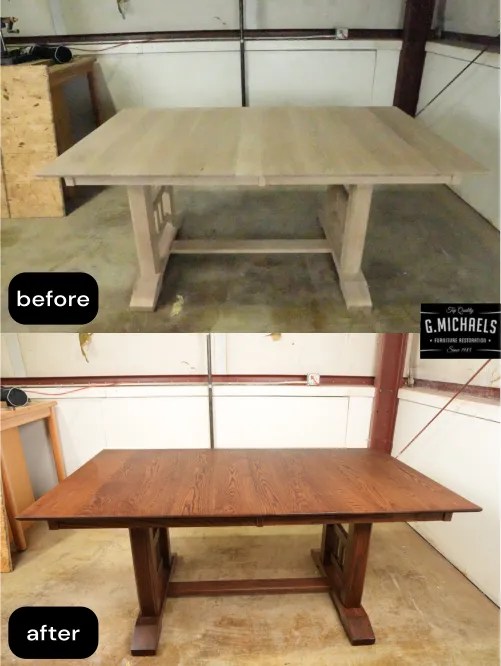
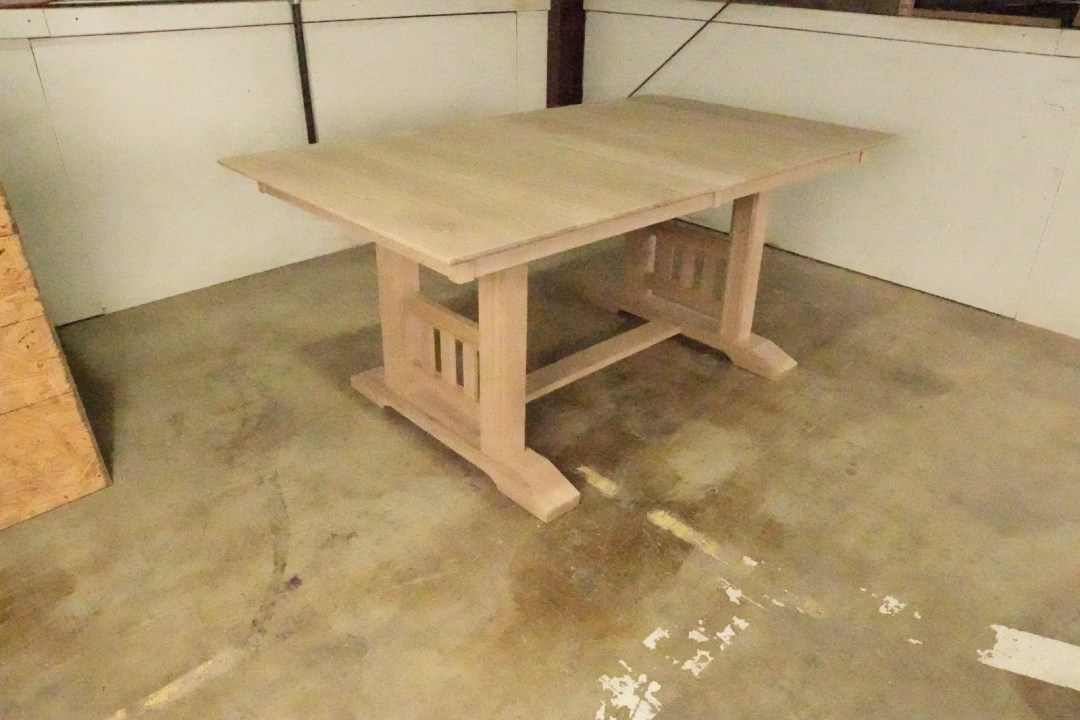
This Mission-style oak trestle table was one of those pieces. It arrived completely unfinished: bare, pale, and waiting. The structure was solid. The oak grain across the top panels had the kind of natural movement and character that most manufactured furniture cannot replicate regardless of price. The trestle base, with its clean slat detailing and squared feet, was well-built and true. Everything about the piece was ready. It just needed the right wood dining table refinishing process to bring it to where it was always supposed to land.
That is what we did.
Project Overview
This project included:
Full surface preparation and sanding of bare raw oak across the tabletop and trestle base Custom stain application built up in stages to develop a rich, deep warm tone throughout Finish system applied over the stained surface to protect the wood and bring the grain forward Consistent color and sheen developed across the top panels, apron, and trestle base as a unified piece Final inspection under multiple lighting conditions before delivery
The Table: What Made This Piece Worth the Investment
Before the process, the piece deserves attention on its own terms.
The form is Mission style, a design tradition rooted in the American Arts and Crafts movement of the late nineteenth and early twentieth centuries. Mission furniture is defined by rectilinear structure, visible joinery, and an emphasis on honest materials over surface ornament. A Mission trestle dining table built well is not a trend piece. It is a form that has been in continuous production and use for well over a century because it works: structurally, aesthetically, and practically.
This table has the characteristic elements of the style done correctly. The trestle base uses paired uprights with slat detail panels between them, connected by a central stretcher and finished with substantial squared feet. The apron is clean and simple. The top is a wide-board oak surface with strong, active grain that reads beautifully under finish. Nothing about the construction is a shortcut.
Raw oak from a well-built piece like this is not a blank slate. It is already most of the way to something excellent. What it needs is a finishing process that develops the character already present in the wood rather than obscuring it.
The Larimer County Department of Natural Resources has documented the longevity and quality of solid hardwood construction in regional craft and furniture traditions, noting that well-built solid wood pieces, when properly finished and maintained, routinely outlast the homes they were built for. This table was built to last. Our job was to finish it correctly so it will.
Preparing Raw Unfinished Oak for Staining
Working with completely raw, unfinished wood is a different proposition than refinishing a piece that already has a finish system on it. There is no existing finish to strip, but there is also no existing surface preparation to rely on. Raw wood from a fabrication shop typically has mill marks, varying surface texture, and open grain that has to be addressed systematically before any stain is applied.
We began with a staged sanding sequence across the tabletop, working through grits to bring the surface to an even, consistent texture across all panels. Active figured oak grain can present varying porosity across a single board: areas where the grain is tighter will absorb stain differently than areas where the grain is more open. Surface preparation that does not account for this produces a blotchy or uneven result even when the stain application itself is technically correct.
The trestle base required the same attention. Slat detail panels with inside corners and tight angles require more careful sanding work than open flat surfaces, and any inconsistency in preparation at the base level will show clearly once stain is applied and the finish is on.
By the time the surface preparation was complete on both the top and the base, the wood was ready to receive stain evenly across the full piece.
Building the Stain: Developing a Deep, Warm Tone in Oak
The color direction on this table was a rich, warm brown that would let the natural oak grain show through with clarity and depth rather than sitting under the stain as a muted background.
Oak is a particularly rewarding wood to stain well because of the way its open grain structure interacts with pigment. The grain lines absorb more stain than the surrounding field, which creates a natural contrast that gives the finished surface visual movement and depth. A good stain application on well-prepared oak does not look applied. It looks like the color was always part of the wood.
Getting there requires building the color in stages rather than applying a single heavy coat and hoping the result is consistent. We evaluated the color at each stage under different lighting conditions to confirm the tone was developing evenly across the full surface of the table and matching between the top panels and the trestle base. Minor variations in how raw oak absorbs stain from one board to the next had to be addressed progressively rather than corrected after the fact.
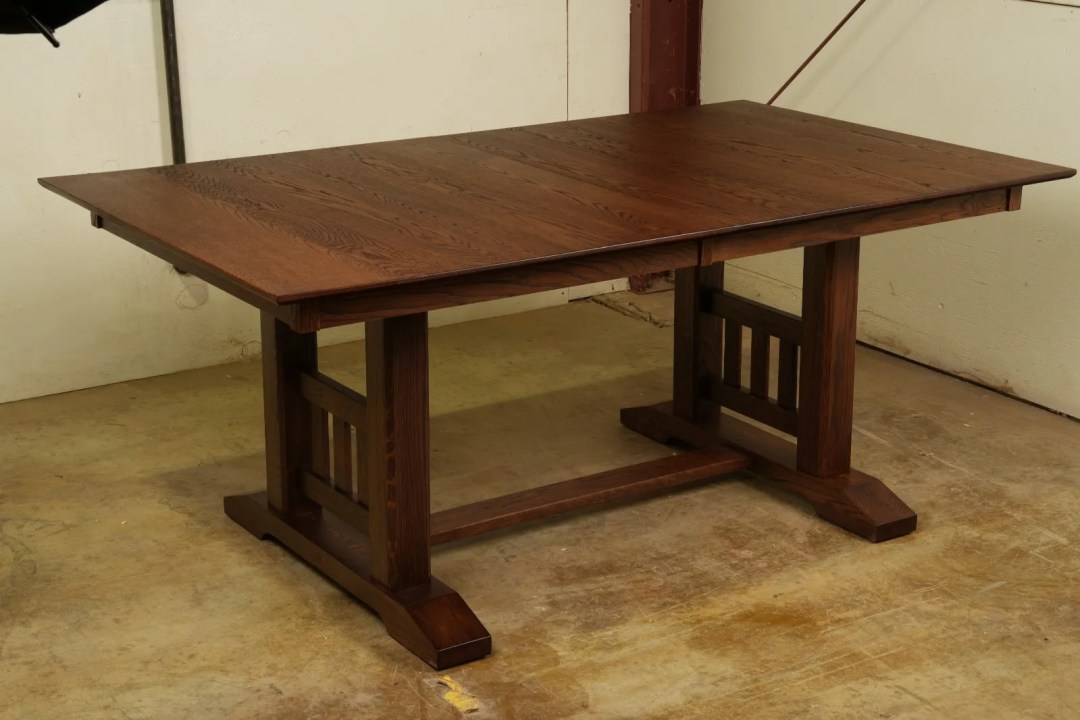
The finished stain tone is a deep, warm reddish brown that brings out the figuring in the oak grain without suppressing it. The contrast between the grain lines and the surrounding wood reads clearly through the finish. The color is consistent from the center of the tabletop to the edges, across all top panels, and down through the apron and trestle base.
This kind of careful, layered color work is a core part of our table refinishing and restoration process on any piece where the natural grain of the wood is a significant part of the visual result.
The Finish System: Protecting the Surface Without Obscuring the Wood
With the stain developed and consistent across the full piece, the final phase was applying a protective finish system that would hold up in daily use without sitting on top of the wood like a plastic coating.
The goal of a good finish on a dining table is a surface that reads as part of the wood. Topcoats that are too heavy, applied too quickly, or not properly leveled between coats produce a surface that looks like the wood is behind glass rather than exposed to the room. That effect is particularly noticeable on figured grain, where depth in the wood is one of the main visual qualities you are trying to preserve.
We applied the finish in multiple coats with leveling between each, evaluating sheen and surface quality at each stage before proceeding. The final surface across both the top and the base is smooth, even, and consistent in sheen level throughout the piece.
A properly applied finish on a solid oak dining table is not decoration. It is protection. The surface system we used on this table will hold up to the ordinary contact, moisture, and thermal variation that a dining table handles every day, and it will continue to look right as long as the piece is maintained correctly. For our approach to finish systems on solid wood dining tables, see our furniture repair and refinishing service pages.
Final Result: A Table That Looks Like It Has Always Belonged
The before and after on this project is as clear as any we have produced. The raw, pale, visually flat piece that arrived in the shop left as a warm, deep, finished dining table with grain that reads beautifully from across a room.
The structure was already there. The material was already there. The process is what connected those things to a result a family can sit around.
This is what wood table refinishing is supposed to do: not change what a piece is, but bring it fully to what it was always capable of being. The Mission form on this table will not go out of style. The oak will not wear out. The finish will protect the surface for years, and when it eventually needs refreshing, the wood underneath will be exactly as it should be.
This table was built to be passed on. It looks like it now.
Services Included in This Mission Oak Dining Table Project
Full raw surface preparation and staged sanding on tabletop and trestle base Multi-stage stain application with progressive color building and evaluation Protective topcoat finish system applied in multiple leveled coats Consistent color and sheen matched across top panels, apron, and base throughout Final quality inspection under multiple lighting conditions
Have an Unfinished, Worn, or Damaged Wood Dining Table?
Whether you have a raw unfinished piece waiting for the right hands, an existing dining table with worn or damaged finish, or a solid wood table that has seen better days, we would be glad to assess what it will take to bring it to where it should be.
We handle the full range of furniture restoration work: custom staining on unfinished pieces, complete refinishing on existing tables, structural repairs, color matching, and finish restoration on surfaces that do not need a full refinish. If you are in Fort Collins, Loveland, Windsor, Boulder, Longmont, Denver, or anywhere in the greater Denver metro area, we can help.
Send photos to shop@gmrestores.com or call us at 970-493-8737. Free estimates are available on all projects, and we offer pickup and delivery throughout our service area.
113 Hickory Street, Fort Collins, Colorado 80524 | (970) 493-8737 | shop@gmrestores.com
Frequently Asked Questions: Wood Dining Table Refinishing in Fort Collins
Can a completely unfinished solid wood dining table be stained and finished to a furniture-quality result?
Yes, and in many ways a completely raw unfinished piece is an ideal starting point. There is no existing finish to strip, no previous stain to contend with, and no surface damage to correct before staining can begin. The work is entirely about preparation and color development rather than remediation. A well-built raw solid wood table, prepared correctly and stained in stages, will produce a result with better color depth and consistency than most factory-finished furniture because the process can be tailored specifically to the grain character and porosity of that piece of wood.
How long does wood dining table refinishing or staining take at your Fort Collins shop?
Timeline depends on the scope of the restoration project and the shop’s current queue. A complete staining and finishing project on a solid oak dining table typically runs two to four weeks from drop-off to completion when done correctly. Rushed surface preparation, inadequate dry time between coats, and color matching done at the end rather than built in throughout are the most common sources of poor results on table finishing projects. We provide honest timeline estimates up front and update clients if anything changes during the process.
What finish is best for a solid oak dining table used daily?
The right finish for a dining table in active use needs to balance durability with appearance. Finishes that are too hard can be brittle and difficult to repair when damaged. Finishes that prioritize appearance over protection require more careful maintenance. We select the finish system based on the specific piece and the client’s use expectations, and we explain the reasoning at the point of assessment. A properly selected and applied finish on a solid oak dining table should provide meaningful protection against the ordinary contact, moisture, and heat that a dining surface handles every day.
Do you refinish dining tables in the Denver area, or only in Fort Collins?
We serve clients throughout the greater Denver metro area in addition to our Fort Collins base. This includes Boulder, Longmont, Loveland, Windsor, Arvada, Lakewood, Aurora, and Denver proper. We offer pickup and delivery throughout our service area. Send photos to shop@gmrestores.com or call us at 970-493-8737 to get started with a free estimate.
Is it worth refinishing a solid wood dining table versus buying a new one?
For a well-built solid wood table, refinishing is almost always the better outcome. Solid hardwood construction of the quality found in older American furniture and in custom-built pieces is difficult to replace at any reasonable price point in the current market. A refinished solid oak table will outperform and outlast most new furniture at comparable price ranges, and it will do so with the visual character that comes from real wood with real grain. The refinishing investment preserves both the material and the craftsmanship already present in the piece.
Located in the historic city of Fort Collins, Colorado, G. Michaels Restoration is an experienced furniture repair and antique furniture restoration shop. We serve Fort Collins, Loveland, Windsor, Boulder, Longmont, Denver, and the greater Denver metro area.
113 Hickory Street, Fort Collins, Colorado 80524 | (970) 493-8737 | shop@gmrestores.com
Located in the historic city of Fort Collins, Colorado. G. Michael’s is an esteemed furniture repair and antique furniture restoration wood shop.