01One piece. One clear restoration story.
Moving companies that are not careful keep us busy.
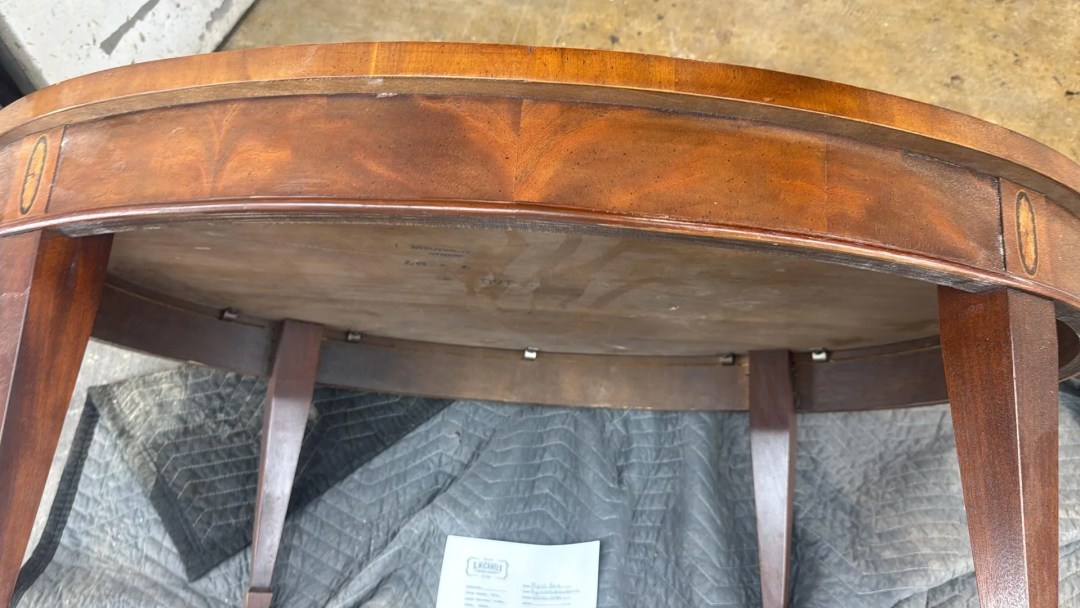
A client came to us after their movers broke the lip trim clean off an oval mahogany dining table during a move. The damage was straightforward in the sense that it was a clean separation, but the piece that came off never made it back to the client. The moving company could not produce it. So there was nothing to reglue, nothing to touch up. The trim was simply gone.
Project Overview
Mahogany table lip repair included:
- Assessment of the damaged edge and remaining original lip profile
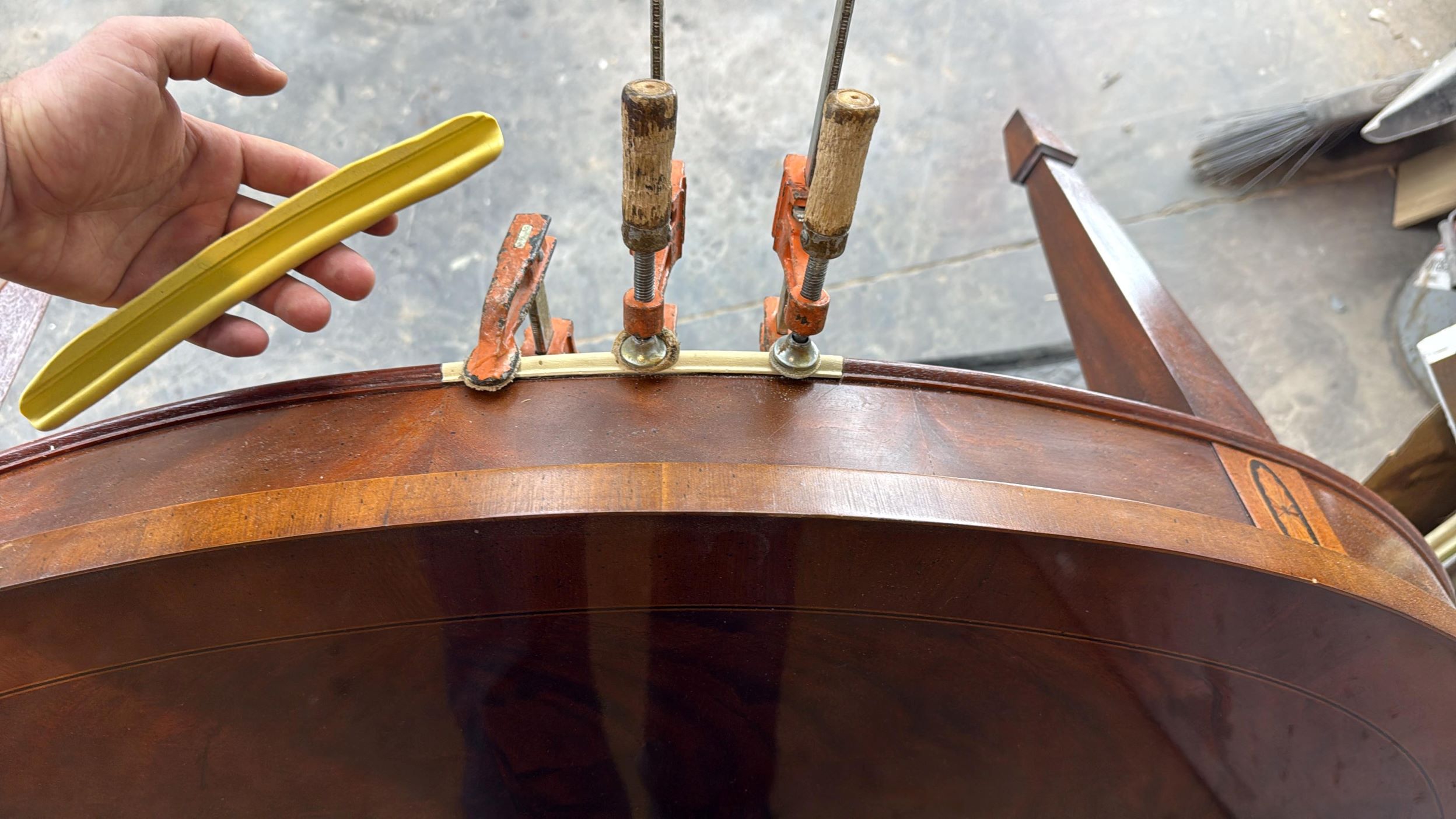
- Mold creation from the intact original trim to capture the exact profile
- Custom fabrication of a replacement lip section from scratch
- Multi-tone stain matching to the banded inlay and surrounding mahogany surfaces
- Finish blending across the repair area to integrate seamlessly with the existing surface
The Table: What We Were Working With
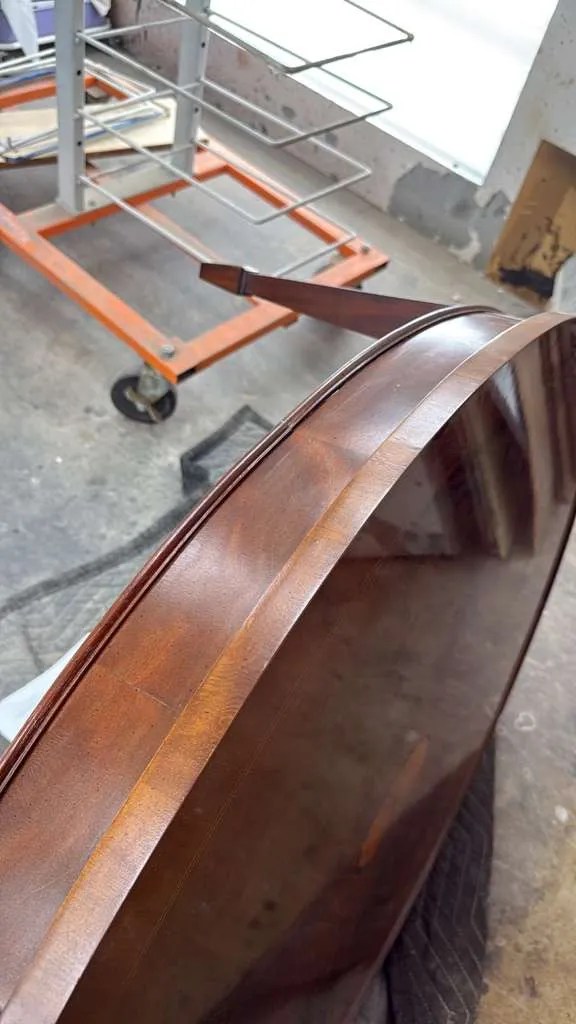
The piece is an oval dining table in mahogany with a curved apron and tapered legs. The top features banded inlay laid in along the perimeter, a decorative element that runs the full circumference and creates a layered tonal border between the field of the top and the edge treatment. The curved lip trim below the top edge follows the oval profile of the table and was a distinct milled component, not a simple flat strip.
This kind of edge detail is not something you find at a lumber yard. It is a shaped profile milled specifically for the piece, curved to follow the oval, and finished as part of the table’s original surface system. When it is gone, it has to be recreated entirely from what remains.
Creating the Mold
Before any fabrication work began, we created a mold from the intact sections of the original lip trim. This is the only reliable method for reproducing a shaped profile accurately when the damaged section is missing. Measuring and eyeballing a curved profile from a flat drawing introduces error at every step. Working from a physical mold of the original means the replacement is shaped from the actual geometry of the piece rather than an approximation of it.
The mold captured the full cross-section of the trim profile, including the curve, the transition at the top edge, and the bottom return. The replacement piece was then fabricated to that profile and curved to follow the oval of the table.