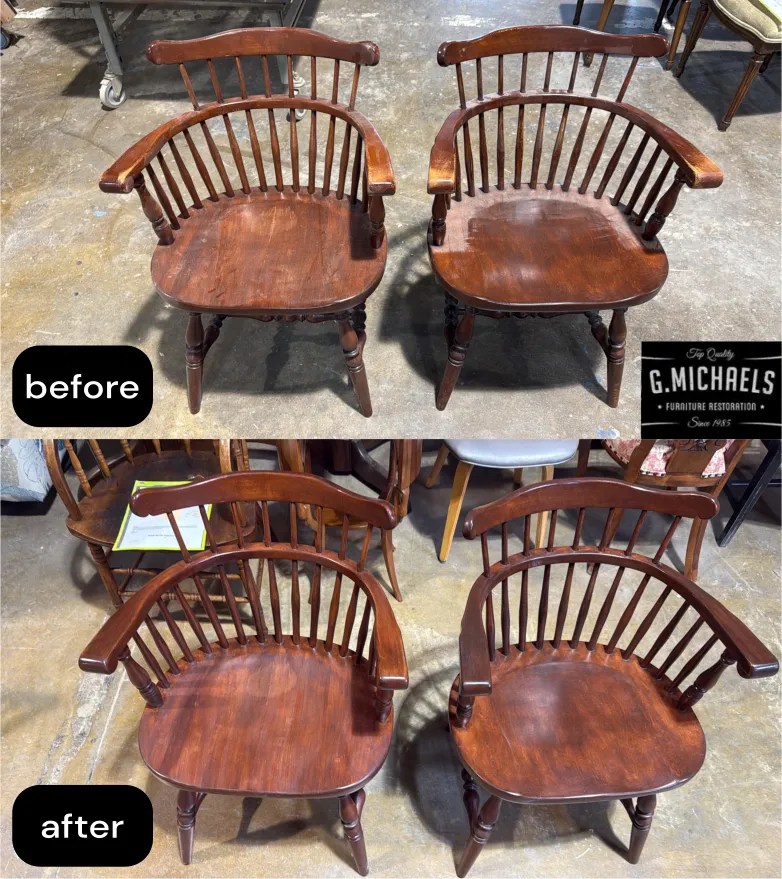
01One piece. One clear restoration story.
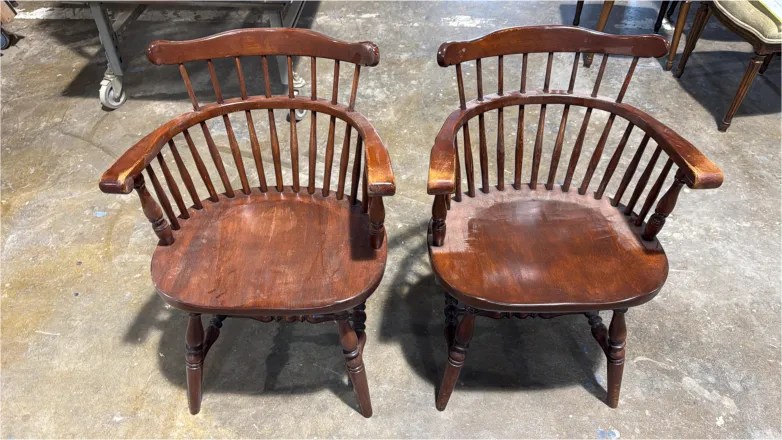
When this pair of Windsor armchairs arrived at our shop, there was nothing wrong with them structurally. The joinery was tight, the seats were solid, and the overall form of both chairs was exactly as it should be. The problem was the finish, which had been wearing away for years in the areas that get the most direct contact: the arms and the spindles.
For a lot of furniture owners, that kind of gradual deterioration is easy to overlook until it isn’t. The finish starts to look dull in one spot, then uneven across the surface, then the contrast between worn areas and intact areas becomes impossible to ignore. By the time these chairs came to us, the finish on both pieces needed professional attention to look right again.
Project Overview
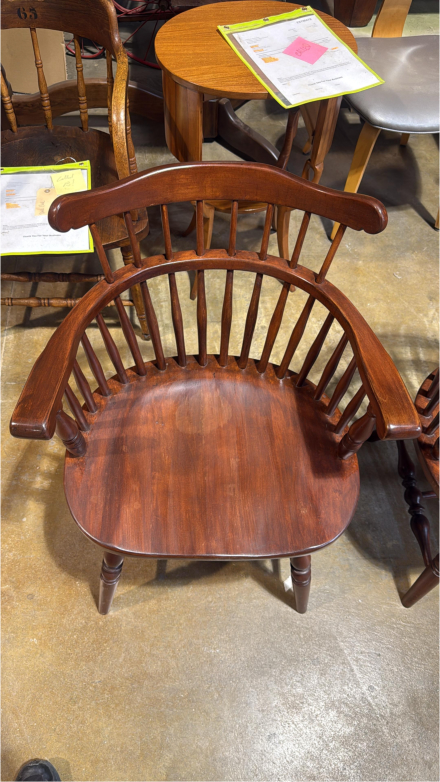
Thorough cleaning of both chairs to remove surface contaminants and prepare the wood for finish work Targeted finish touch-up across the arms and spindles of both pieces Full-surface blending to achieve consistent sheen and tone across each chair from seat to crest rail Careful attention to matching the existing finish character without introducing visible repair lines
Why the Right Approach Matters on Finish Touch-Up Work
Not every piece of furniture that comes through our shop needs a full strip and refinish. In many cases, a complete refinish is actually the wrong call, because it means removing original finish that still has integrity in order to address the areas that don’t.
When a piece like this comes in with localized finish failure and sound overall structure, the correct approach is targeted restoration: clean the piece properly, address the worn areas with careful touch-up work, and blend everything back together so the surface reads as consistent and unified.
What We Assessed Before Starting
Before we touched either chair, we evaluated both pieces carefully:
Condition of the existing finish across the full surface of each chair, including areas not visibly affected by wear Sheen level and tone of the intact original finish so we could match it precisely in the touch-up work Surface contamination and any residue that would need to be removed before finish work could begin Whether a full refinish was warranted or whether targeted touch-up would achieve a complete result